11/19/26
How to Know the Mind According to The Tibetan Book of the Great Liberation
A practical introduction to the teachings attributed to Padmasambhava
The central teaching of The Tibetan Book of the Great Liberation is that knowing the mind means recognizing the nature of awareness itself, rather than merely studying your thoughts, memories, emotions, and desires.
The text belongs to the Tibetan Buddhist tradition of Dzogchen, which emphasizes recognizing the mind’s fundamental nature directly.
1. Understand the difference between thoughts and awareness
Consider these three experiences:
- You think, “I must finish my work.”
- You feel anger toward another person.
- You experience a desire for something pleasurable.
All three are experiences appearing in the mind. But the book invites you to investigate something more fundamental:
What is it that knows these thoughts, feelings, and desires?
In ordinary life, we concentrate on the contents of consciousness. In this teaching, we turn our attention toward the knowing quality of consciousness itself.
For example, when anger appears, instead of immediately saying “I am angry,” recognize:
“Anger is present, and it is being known.”
This is the beginning of investigating the mind.
2. Five principles for knowing the mind
| Principle | Practical meaning |
|---|---|
| 1. Awareness | Notice thoughts, sensations, and emotions as they arise. |
| 2. Impermanence | Observe that mental experiences continually change. |
| 3. Non-grasping | Avoid automatically pursuing pleasant thoughts or resisting unpleasant ones. |
| 4. Non-identification | Recognize that a thought is not necessarily your identity or a command. |
| 5. Direct recognition | Investigate the awareness in which all these experiences are known. |
The fifth principle is especially important. The book is not simply teaching relaxation or positive thinking. It points toward recognizing the nature of mind beyond habitual conceptual judgments.
3. A 15-minute exercise to begin knowing your mind
This is a beginner-friendly exercise inspired by the book, not a substitute for the traditional Dzogchen instruction of a qualified teacher.
Daily mind-observation practice of 5 completed
[Reset practice]
4. What does the book mean by the true nature of mind?
The text describes mind as not being a solid, independently existing object. It emphasizes clarity, emptiness, and the inseparability of awareness and emptiness.
Thoughts and emotions are like changing clouds; open awareness is compared to the sky. The analogy is not a claim that awareness is a permanent soul.
A central distinction is that emptiness does not mean unconsciousness or nothingness. In Buddhist philosophy, it points to the absence of fixed, independent existence.
The text’s expression self-liberation refers to recognizing mental experiences without grasping at them, so they need not perpetuate confusion and suffering.
5. Apply the teaching to everyday life
Suppose you experience an unwanted desire while using the internet.
An ordinary reaction might be: “I have this desire, therefore I must act on it.”
The practice of knowing the mind suggests another approach:
- Recognize: “A desire has arisen.”
- Observe the sensations and thoughts associated with it.
- Notice that the desire changes in intensity.
- Avoid identifying yourself with the desire.
- Choose your next action according to your values.
This application combines Buddhist observation with practical self-regulation. It does not mean desires must disappear or that experiencing them is a moral failure.
6. Seven questions for investigating your mind
Use one question each day for a week.
Seven-day contemplation Choose a day
DAY
Contemplate gently for 3–5 minutes. You do not need to arrive at a verbal answer.
7. What is the ultimate goal?
According to the text, the ultimate aim is not merely to develop better concentration, control thoughts, or experience temporary peace. It is the recognition of the mind’s nature, traditionally understood as a path to liberation from ignorance and suffering.
The book’s principal practice section is titled The Yoga of Knowing the Mind, the Seeing of Reality, Called Self-Liberation, beginning on page 194 of the 2000 Oxford edition.
For deeper practice, traditional Dzogchen teachings place importance on guidance from a qualified teacher. Start with short, grounded sessions rather than prolonged meditation or attempts to force unusual states. If meditation causes agitation, sleeplessness, or a sense of unreality, stop and return to ordinary activities.
The most useful question to carry into daily life is:
A thought has appeared in my mind. Can I know it clearly without becoming entangled in it?
That question can begin a lifelong investigation of consciousness, freedom, and wisdom.
11/19/26
Give the two sets of Sequence from Buddhism – Conditioned by ignorance is Karma… Stopping of ignorance stops Karma …
In Buddhism, these two sequences are called Dependent Origination (Paṭicca-samuppāda) and Dependent Cessation (Paṭicca-nirodha).
They explain how suffering arises through ignorance and how suffering ceases through the ending of ignorance.
- The sequence of arising — How suffering originates
THE TWELVE LINKS OF DEPENDENT ORIGINATION - Conditioned by Ignorance (Avijjā) arise Volitional Formations / Karma (Saṅkhāra).
- Conditioned by Volitional Formations arises Consciousness (Viññāṇa).
- Conditioned by Consciousness arises Name-and-Form (Nāma-rūpa).
- Conditioned by Name-and-Form arise the Six Sense Bases (Saḷāyatana).
- Conditioned by the Six Sense Bases arises Contact (Phassa).
- Conditioned by Contact arises Feeling (Vedanā).
- Conditioned by Feeling arises Craving (Taṇhā).
- Conditioned by Craving arises Clinging (Upādāna).
- Conditioned by Clinging arises Becoming (Bhava).
- Conditioned by Becoming arises Birth (Jāti).
- Conditioned by Birth arise Aging and Death (Jarā-maraṇa).
Sorrow, lamentation, pain, grief and despair arise.
Thus arises this whole mass of suffering.
- The sequence of cessation — How suffering ends
THE TWELVE LINKS OF DEPENDENT CESSATION - With the cessation of Ignorance cease Volitional Formations / Karma.
- With the cessation of Volitional Formations ceases Consciousness.
- With the cessation of Consciousness ceases Name-and-Form.
- With the cessation of Name-and-Form cease the Six Sense Bases.
- With the cessation of the Six Sense Bases ceases Contact.
- With the cessation of Contact ceases Feeling.
- With the cessation of Feeling ceases Craving.
- With the cessation of Craving ceases Clinging.
- With the cessation of Clinging ceases Becoming.
- With the cessation of Becoming ceases Birth.
- With the cessation of Birth cease Aging and Death.
Sorrow, lamentation, pain, grief and despair cease.
Thus ceases this whole mass of suffering.
- The Buddha’s fundamental teaching
The principle is expressed in the Pali Canon as:
Imasmiṃ sati idaṃ hoti; imassuppādā idaṃ uppajjati.
When this exists, that comes to be. With the arising of this, that arises.
Imasmiṃ asati idaṃ na hoti; imassa nirodhā idaṃ nirujjhati.
When this does not exist, that does not come to be. With the cessation of this, that ceases.
- Practical significance
The Buddha taught that ignorance is a fundamental condition for the cycle of suffering. Ignorance means not seeing reality clearly, particularly the Four Noble Truths.
The cessation of ignorance is developed through wisdom, ethical conduct, and meditation, as taught in the Noble Eightfold Path.
Importantly, the cessation sequence describes liberation from the cycle of suffering, not the immediate disappearance of ordinary consciousness, sensations, or the physical body.
Scriptural references: Saṃyutta Nikāya 12.1–12.2, Paṭiccasamuppāda Sutta and Vibhaṅga Sutta.
The central lesson is:
With ignorance, suffering arises. With wisdom that ends ignorance, the conditions sustaining suffering cease.
11/7/26
Compassion, loving kindness. Very strong level, also kind of emotion. But that, based on sound reasons. Anger, no sound basis, just emotion. The compassionate mind, through training, is very sound basis, yeah. So, that brings inner strength. That brings self-confidence. That creates determination, willpower, not due to blind faith, but through reasoning. Then, as Shantideva says, when you face some problem, you analyze the problem. If the problem can overcome, then no use worry. Make effort. If the reality, the problem, cannot overcome, then no use too much of sorrow or so worry. Very realistic.
The Fourteenth Dalai Lama
1/5/26
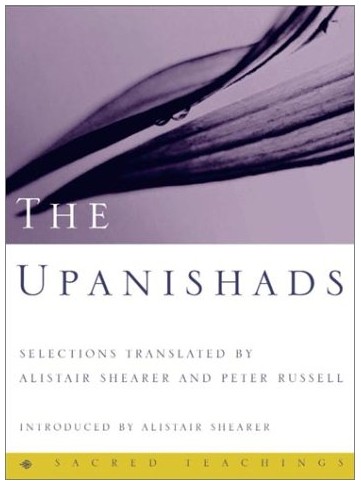
The Upanishads are the oldest and clearest expression of the perennial philosophy that is the inner core of all the great religions. Passed down by word of mouth for five thousand years, they teach of an absolute and unified field of intelligence that underlies and permeates all creation. This divine ground is our own nature, and to bring our lives into conscious harmony with it is the ultimate purpose of human existence.
This lucid translation captures both the poetry and the precision of the original, rendering accessible an extraordinary body of spiritual wisdom as never before. Speaking from the depth of the everlasting NOW, the Upanishads make the mind soar and the heart sing, and point the soul to freedom.
Source – Amazon.com